
A Hesitation Over a Hebrew Vowel Mark
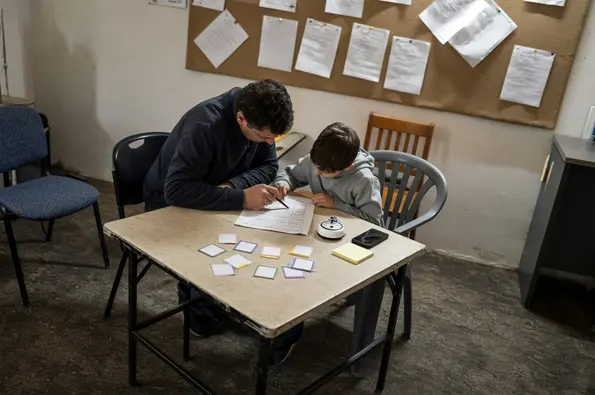
Imagine a second-grader pausing over a vowel-marked Hebrew word. The tutor listens: has the child confused the vowel mark, or lost a consonant sound while blending? A prompt might direct attention to the mark. A model might make the sound sequence clearer. Another attempt might reveal that the child can work through the word independently.
This illustrative moment captures a practical question: how can a small observation during decoding practice guide the next teaching decision?
The case Inside a 12-Week Hebrew Decoding Intervention: What 240 Tutoring Sessions Revealed concerns 20 second- and third-graders across four Israeli cities. Its combination of fluency benchmarks, attendance patterns, and tutor adjustment logs offers a framework for examining that question. Each record serves a different purpose, from identifying a decoding difficulty to preparing the next task.
For educational programs supporting children with learning difficulties, the useful unit of attention is often this small: one pattern, the assistance offered, and what the child does next.
Separate Program Delivery From Each Child’s Practice
The 240 sessions describe the program’s total delivery across 12 weeks. A coordinator reading that total still needs to trace each child’s attended practice opportunities, the vowel patterns addressed, and the support used. Dividing the total evenly among the children would obscure those individual sequences.
Treat this 12-week case as a planning example for similar tutoring settings, rather than a prediction of an individual child's progress.
Bring its three evidence streams together around a teaching decision:
- Fluency benchmarks: identify a reading feature that needs a closer check, such as accuracy on a particular letter–vowel relationship.
- Attendance patterns: establish which opportunities for focused practice occurred and where scheduling needs attention.
- Tutor adjustment logs: show what changed in the task or assistance, helping the next tutor choose where to begin.
A practical working record can hold the decoding target, task, observed response, support used, attendance status, and next instructional step. This is a proposed implementation tool. Its value lies in keeping the teaching sequence visible: what the child encountered, how the tutor responded, and what deserves checking again.
Listen for Accuracy, Pace, and Independent Decoding
A faster reading attempt and a more independent attempt answer different questions. Speed describes pace. Independence describes how much assistance the child needs. Accuracy and self-correction deserve their own entries, too.
Start each observation by identifying a specific letter–vowel relationship. Listen to a brief attempt, record the response and any prompting, then select practice that addresses the difficulty you heard.
In Hebrew decoding, that difficulty might involve confusing two vowel marks, dropping a consonant sound while blending, or reading a familiar practice word while hesitating on a different word containing the same pattern. Those observations point toward different tasks. The child who confuses marks needs attention to the sound relationship; the child who drops a consonant needs a closer look at blending.
Keep the Reading Conditions Visible
Record whether the words are vowel-marked, whether the child has practiced them, how demanding the text is, and what assistance the tutor provides. These details help a coordinator compare attempts meaningfully.
If the child reads faster while repeating the same error, examine that error before increasing pace. If the child reads accurately with less prompting, record the reduction in assistance. A self-correction also belongs in the record: it tells the next tutor that the child noticed and repaired something.
Revisit One Error
After a timed check, return to one error without timing and ask the child to work through the word. Use that response to choose the next practice task.
Put Attendance and Vowel-Pattern Practice on One Timeline
“What would make the next session easier to attend?” is a useful proposed question when contacting a parent after missed practice. It opens a conversation about access while keeping the intended learning opportunity in view.
The coordinator’s record should connect scheduled sessions, attended or interrupted sessions, and the targets actually practiced. Calendar time and instructional exposure belong in separate entries. A week can pass without a child receiving focused practice on the pattern selected at the previous checkpoint.
For an interrupted session, record what the tutor reached and what the child completed. Attendance status alone gives too little detail for planning the next task.
Before interpreting a stalled checkpoint, review the preceding practice opportunities alongside the decoding attempts and teaching changes. This keeps scheduling questions and instructional questions in the same conversation, without treating attendance as the explanation for every change in performance.
A parent message can be specific: “We missed practice on reading the vowel mark in this pattern. Could we agree on a brief practice task, or arrange the next session?” The pathway forward is a feasible opportunity to practice the intended target.
Use Diverging Paths to Ask Better Teaching Questions
The case follows three anonymized students whose trajectories diverged sharply. For a coordinator, that divergence makes three questions especially useful: what changed in decoding, what practice did the child receive, and what did the tutor change next?
The following hypothetical teaching situations illustrate how to use those questions; they are separate from the three students in the case.
Accurate Reading With Effortful Blending
A child reads correctly but pauses while combining sounds. Keep practice focused on a narrow letter–vowel pattern, then offer a different word containing it. Compare the blending process as well as the final answer.
Quick Reading With a Repeated Vowel Error
A child moves rapidly through words while repeatedly confusing a vowel mark. Slow the task down, examine that particular error, and rehearse the relevant sound relationship. The next check should attend to accuracy on the mark.
Success With a Prompt, Hesitation Without It
A child reads after the tutor supplies a prompt, then hesitates when that prompt disappears. Reduce one prompt while keeping the task manageable and observe the independent response.
Each situation calls for a distinct teaching question. Recording the observable behavior first keeps the discussion focused on instruction and gives the next tutor something concrete to check.
Write a Handover That Preserves the Teaching Decision
Before a useful handover, the next tutor may have only “needs more practice” to work with. That phrase leaves the target, assistance, and next task undecided. A fuller entry carries the instructional sequence forward.
Record the observed difficulty, the change made, the child’s immediate response, and what to check next. Where practical, change one variable at a time, such as prompt level or practice-set size, so the response remains interpretable.
A hypothetical entry could read:
The child blended the target pattern after I modeled it. I reduced the practice set and repeated that pattern. On the repeated attempt, the child blended it with a verbal reminder. Begin the next session with an independent attempt on a different word using the same pattern.
The next tutor can now select a different word and check whether the child reads it without the earlier assistance. The entry also distinguishes success after a model from success after a verbal reminder—an important detail when deciding how much help to offer.
A Checkable Handover
Pair each decoding observation with one teaching adjustment and one planned check.
Prepare a Pattern, a Prompt, and an Independent Word
Suppose the last observation records hesitation over a vowel mark during blending. Prepare a short practice set using that letter–vowel relationship, and reserve a different word for the independent check.
- Review the last observation. Identify where the hesitation occurred and what help preceded a successful response.
- Select one target. Keep the practice set focused on that relationship.
- Choose the assistance. Prepare a prompt directing attention to the vowel mark.
- Write the next decision. An accurate independent response leads to another word with the pattern; another hesitation leads to the planned prompt and focused practice before a fresh check.
Share a plain-English instruction with the parent or next tutor: “Ask the child to say the consonant sound and the sound shown by the vowel mark, then blend them. After practice, ask for the reserved word without giving those sounds first.” Keep that instruction beside the practice words so the next person can use it directly.
Before the next session, write down one target pattern, one prompt you will try, and one word the child will attempt independently afterward.










Responses
The conversation starts with you.
Leave a Comment