
Inclusive classrooms depend on dozens of small, deliberate actions: a direction restated calmly, a worksheet made easier to navigate, a familiar strategy card placed within reach. Volunteers can contribute to those moments when their role is clear, their preparation matches the assignment, and a trained educator remains responsible for the learning plan.
This guide explains what inclusive learning volunteers may do, where their authority ends, how a supervised session can unfold, and what information to prepare before asking to get involved.
Contents
- How classroom support became a shared responsibility
- Tasks an inclusive learning volunteer may handle
- From orientation to a verified volunteer session
- Using the pause, prompt, and report routine
- Choosing an inclusive learning role you can sustain
- How this guidance is checked and what to do next
How Classroom Support Became a Shared Responsibility
Learning support was once commonly organized away from the peer classroom. A child who needed additional instruction might leave the room, work separately, or spend much of the school day in a distinct setting. Inclusive education shifted the practical question. Schools increasingly began asking how a child could participate in a shared classroom while receiving appropriate support there.
That shift changes more than location. Participation may require accessible materials, carefully sequenced instructions, planned transitions, specialist input, and time to process a question. The details can differ among Israeli schools and from one individual learning plan to another.
The Placement Support Circle
A volunteer occupies one defined place within a wider circle. Depending on the placement, that circle may include a classroom educator, a specialist or mentor, a supervising Achiya team member, a family contact, and the volunteer. Some placements involve only part of this group, so applicants should ask who directs the work and who receives concerns.
The educator-selected objective provides the starting point. A volunteer may reinforce that objective and encourage the learner. Diagnosis, treatment recommendations, assessment, and work that replaces a qualified teacher or therapist remain outside the role.
The Classroom Boundary: Volunteers support participation through an approved plan. They do not create the plan or make independent clinical and instructional decisions.
This distinction protects the child and gives the volunteer a workable assignment. It also makes accounts of our impact more credible because observations can be connected to a stated goal, an assigned activity, and a known level of support.
The Tasks an Inclusive Learning Volunteer May Handle
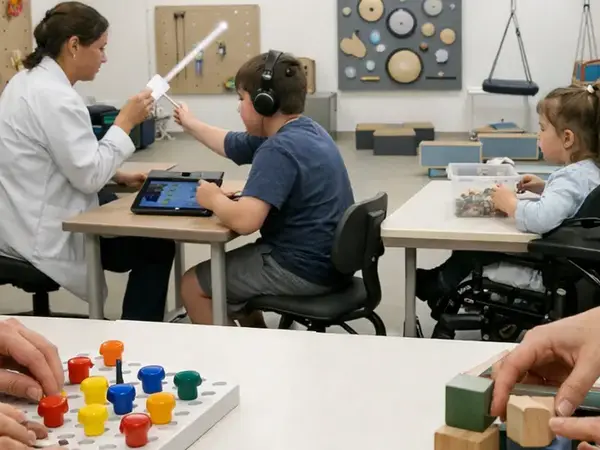
The clearest way to understand the role is to picture an ordinary lesson. The class is beginning a written task. One learner has the same objective as the group but needs a simplified page layout and a reminder of the first step. Another is practicing a skill already selected by the educator. A small group needs help staying with the sequence of an activity.
Within an approved assignment, a volunteer may:
- Prepare accessible materials specified by the educator.
- Rehearse one assigned academic skill or learning routine with a child.
- Support a small group using the material and directions provided.
- Help a learner begin by restating the first instruction.
- Point back to an established strategy, checklist, or visual cue.
- Assist with a planned transition between activities or spaces.
Tutoring and Mentoring Serve Different Purposes
Tutoring concentrates on an assigned academic skill or routine. A tutoring volunteer might practice decoding a short passage, review number facts selected by the educator, or help a learner follow the stages of a writing task.
Mentoring places greater emphasis on confidence, communication, persistence, and dependable connection. The mentor may listen as a child describes a difficult school week, recognize the effort involved in returning to a task, or practice asking for clarification. Mentoring still follows placement boundaries; it does not turn the volunteer into a counselor or family intermediary.
Prompt Without Taking Over
Useful prompting begins with restraint. Restate the direction, divide the assigned task into smaller steps, and then allow processing time. Unless the child’s plan specifies another interval, the documented prompt sequence allows 5–10 seconds before the volunteer adds help.
Praise should identify effort or strategy: “You checked the direction before starting,” or “You went back to the sound card.” Supplying the answer may finish the page faster, yet it removes the learner’s opportunity to use the intended skill.
Assessment, changes to the instructional plan, crisis decisions, discipline, medication, and confidential communication with family members belong to authorized staff. Learning notes should travel only through an approved channel. When a supervisor confirms same-day reporting, the volunteer submits those notes by the end of that calendar day.
From Orientation to a Verified Volunteer Session
A volunteer profile requires more than an appealing anecdote. It needs documented consent, confirmation of the assigned role, and records that distinguish what an educator observed from what a participant later interpreted. No consented volunteer record or confirmed onboarding sequence was supplied for this guide, so a named or reconstructed case would be misleading.
A Missing Record Matters: Operational stories should be published only after the volunteer’s account, supervision record, and educator confirmation agree on the essential sequence.
Before the First Session
Possible onboarding stages include an introductory conversation, screening, safeguarding guidance, role-specific instruction, observation, matching, and supervised practice. Each stage should appear in a placement description only after Achiya confirms that it occurred there. A list of possible steps cannot be treated as a universal procedure across educational programs.
Commitment also needs to be broken into its real components. Applicants should ask about recurring placement time, preparation, staff check-ins, travel where relevant, weekly frequency, and the proposed start and end dates. A single headline figure can hide the practical demands that determine whether attendance will remain dependable.
During the Classroom Visit
A documented session begins when the volunteer receives the objective and assigned material. The record then follows the greeting, the task, any observable sign of frustration or fatigue, the approved adjustment, and the staff debrief. Where records permit, a five-minute chronology can help reviewers see whether an intervention came too quickly or followed the agreed plan.
The volunteer’s account should use observable language. “The learner put the pencil down and looked away for about a minute” gives staff something concrete to review. A character judgment such as “The learner became lazy” does not.
After the Session
A quotation from the volunteer should be checked against the recording or approved written response within 1–5 business days after transcription. Any quotation from a child requires documented permission, including parent or guardian consent when required. These safeguards preserve the dignity of the people whose experiences make a case study possible.
Use the Pause, Prompt, and Report Routine
When a learner becomes stuck, the volunteer needs a routine simple enough to remember in a busy room. The sequence runs from the educator-selected goal to the assigned material, the least intrusive prompt, a documented processing wait, and a factual report to staff.
- Pause. Give the learner time before stepping in.
- Check the objective. Confirm what the educator asked the learner to practice.
- Choose the lightest approved prompt. Use the strategy, instruction, or choice already authorized.
- Wait for a response. Allow 5–10 seconds unless prior guidance sets a different interval.
- Report what happened. Record the event, the prompt, and the observable response.
A Reading Task in Practice
Imagine a learner hesitating at the first line of an assigned reading passage. The volunteer waits. After checking that the objective involves using a familiar decoding routine, the volunteer points to the approved strategy card and restates the relevant direction.
If the educator has already authorized a choice, the volunteer might ask whether the learner wants to begin by reading the first word aloud or marking the first sound. The volunteer does not read the answer, introduce a new technique, or turn the moment into an informal assessment.
Once the learner responds, the volunteer continues within the plan. During the debrief, the report contains three facts: what happened immediately before the hesitation, the exact prompt used, and what the learner visibly or audibly did next.
When Staff Need to Step In
Further prompting stops when distress is escalating, a safeguarding concern appears, the learner requests an unfamiliar accommodation, or the situation exceeds the volunteer’s training. Safeguarding concerns require immediate escalation. An ordinary session debrief should be completed before leaving or within 0–24 hours, according to the approved reporting channel.
Strategy-Card Limit: Pointing a learner back to an approved routine fits the volunteer role. Assessment, plan changes, crisis decisions, discipline, medication, and confidential family communication stay with authorized staff.
Choose an Inclusive Learning Role You Can Sustain
The strongest placement is the one a volunteer can perform consistently, within training and under suitable supervision. Demanding assignments carry little value when an unpredictable schedule leads to frequent absences.
Check Your Readiness
Before applying, assess six practical behaviors:
- Can you attend dependably?
- Can you remain patient when a direction needs to be repeated?
- Can you receive corrective feedback without becoming defensive?
- Will you protect information about children and families?
- Can you follow an existing plan even when you might choose another approach?
- Will you ask for help as soon as a situation exceeds your role?
Applicants should prepare exact weekly availability for the next 8–12 weeks, including days, start and end times, travel limits, and dates when they already know they are unavailable. This planning window supplies useful intake information; it does not establish a promised placement length.
Compare the Likely Formats
Structured academic practice may suit someone who enjoys clear tasks, repetition, and close attention to an educator-selected skill. Encouragement-centered mentoring may fit a volunteer who listens carefully and can build a dependable connection while respecting boundaries. Classroom assistance often calls for comfort with teacher direction, changing activity levels, and several learners sharing the same space.
These formats describe possible roles rather than current vacancies. Matching works in both directions. The team examines safety and role fit, while the applicant decides whether the schedule, supervision, accessibility, and responsibilities are sustainable.
Fit That Lasts: Record preferences for location, spoken and reading languages, age group, individual or group work, physical or sensory accessibility requirements, and relevant educational experience. Specific information produces a more useful matching conversation.

How This Guidance Is Checked and What to Do Next
Volunteer guidance should identify its writer, reviewer, and date of operational check. The writer is identified separately on this page. A reviewer’s name and credentials should be displayed only after Achiya verifies the person’s current role and direct responsibility for the guidance.
Role descriptions and safeguarding requirements should be rechecked within 0–30 calendar days before publication. The volunteer contact route needs a tighter check: within 0–7 calendar days, including a test that the channel still accepts inquiries. These checks apply to the current scope of prospective inclusive-classroom placements rather than every service Achiya may provide.
Volunteer duties and onboarding can differ by program, school setting, individual learning plan, child needs, language, preparation, and current safeguarding requirements. Reliable support begins with an honest account of what an applicant can sustain.
Open Achiya’s current volunteer inquiry channel and submit these five items: your weekly availability, preferred age group, location, language abilities, and relevant experience.










Responses
The conversation starts with you.
Leave a Comment