
For a teenager with ADHD, missed homework can become more than a record of incomplete tasks. Each unclear instruction, delayed start, and forgotten submission can widen an academic gap while weakening the student’s confidence in their ability to recover.
This case follows one high school student with ADHD who entered a structured peer-mentoring program and was paired with a trained peer mentor. After the pairing, qualitative improvements were observed in three connected areas: sustained focus, homework completion, and self-esteem. The case offers a useful implementation model, provided its individual scope remains clear.
Contents
- When Missed Work Starts Eroding Confidence
- The Challenge Behind the Missing Assignments
- The Mentoring Plan—and Why It Changed the Pattern
- Practical Tip: Begin With One Observable Goal
- Key Takeaway: Make the Relationship Predictable
- Prepared by achiya’s Educational Programs Team
When Missed Work Starts Eroding Confidence
Homework difficulty often appears first as a practical problem. A student misses an instruction, cannot locate the correct materials, or opens an assignment too late to finish it. Over time, those incidents accumulate. The teenager may begin to expect another unsuccessful evening before the work has even started.
That expectation matters. Discouragement can reduce persistence, make requests for help feel more exposing, and turn an ordinary assignment into evidence the student uses against themselves. Adults may see avoidance or weak motivation. The student may be experiencing a repeated breakdown between intending to work and organizing the actions required to begin.
In the supplied case, the student’s participation in peer mentoring created a different point of entry. The mentor offered a consistent relationship alongside practical attention to assignments. This combination gave the student a place to identify what was due, select a next action, and return to unfinished work without every conversation becoming a judgment about past performance.
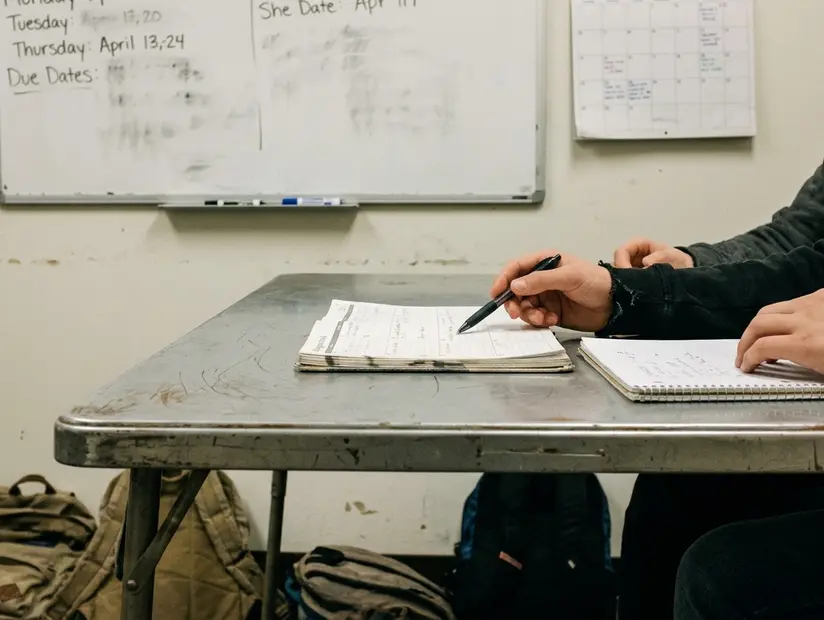
The reported changes were qualitative. Focus improved, more homework was completed, and the student showed greater confidence. No age, grade, baseline marks, program duration, meeting schedule, or diagnosis history was documented, so those details should not be inferred. The value of the case lies in the pattern it illustrates rather than in a claim of universal effectiveness.
The Challenge Behind the Missing Assignments
The missing work formed a connected cycle. Attention slips made it harder to capture instructions accurately. Unclear tasks then delayed initiation. Unfinished assignments accumulated, and the resulting discouragement raised the emotional cost of making another attempt.
Subject tutoring alone would address only part of that sequence. A tutor might explain a mathematical procedure or clarify a reading passage. The immediate need here centered on executive function: planning the work, choosing a priority, initiating the first step, monitoring progress, and confirming completion.
Why Reminders Lose Their Force
A reminder such as “finish your homework” names the desired outcome without supplying a route toward it. A teenager facing several assignments still has to determine which task comes first, what materials it requires, how to begin, and how completion will be verified. Repeated reminders can increase tension when the underlying process remains undefined.
A more useful exchange makes the sequence visible. The mentor can check what the student recorded, identify the next due task, name its first observable action, and agree on how the finished work will be checked. These steps reduce the number of decisions the student must hold in mind at once.
Role boundaries remain important. When course requirements are unclear, the mentor should route the question to the designated teacher or supervising adult within one to two school days. Interpreting ambiguous academic requirements independently places the mentor in a role the program has not assigned and may leave the student following incorrect directions.
The Mentoring Plan—and Why It Changed the Pattern
The pairing prioritized reliability, patient communication, encouragement, and practical accountability. Shared interests may help two people connect, yet they do not establish readiness on their own. A suitable mentor must also follow boundaries, use the agreed session structure, document relevant actions, and escalate concerns through the named adult.
From Program Decision to Student Action
- Review assignments. The mentor and student examine the existing planner, assignment portal, or recorded task list. This creates a common picture of the work rather than relying on memory.
- Select a priority. They identify the next due or most immediately actionable task. Priority selection prevents the student from moving between several assignments without beginning any of them.
- Break down the task. The pair names the first visible action, such as opening the required document, locating a worksheet, or writing the first response.
- Support the start. The mentor remains present while the student initiates the task. Beginning during the meeting allows planning to become behavior.
- Agree on independent completion. The student states what will be completed, when it will happen, and how the mentor or supervising adult will confirm it.
This five-step structure is a proposed implementation model. The historical records establish regular structured engagement with a trained mentor, but they do not confirm a precise session length, meeting frequency, or training curriculum.
Reading the Results Carefully
Different forms of evidence answer different questions. Submitted work provides behavioral evidence of completion. Notes from a mentor and observations from a teacher or parent supply context. Confidence belongs to the student’s self-reported experience. Keeping those categories separate helps programs describe their impact without turning an encouraging case into a stronger causal claim than the documentation supports.
Mentor preparation should cover active listening, role boundaries, session structure, documentation, and the route for academic, emotional, or safety escalation. A warm peer match can drift into an informal conversation when assignment review, a visible next action, and follow-up disappear from the meeting.
Boundaries Protect the Student
If severe distress, persistent school refusal, or a safety concern appears, the mentor should contact the designated supervising adult that same school day. Clinical assessment and crisis management sit outside the peer mentor’s role.
Practical Tip: Begin With One Observable Goal
Choose one behavior the student can see, perform, and verify. Suitable starting goals include recording assignments before leaving class, opening the required materials at a planned time, or submitting work that has already been completed.
A narrowly defined goal gives the mentoring relationship a workable focus. “Become more organized” remains difficult to practice or measure. “Record each assignment in the existing planner before leaving class” identifies an action, a setting, and a record that can be reviewed.
Capture the Ordinary Pattern First
Before changing several routines, collect a baseline across five to ten consecutive school days. This timeframe is an implementation recommendation for future use of the model, not a detail from the reported case. Existing planners, assignment portals, or one brief daily check-in will usually provide enough information. A separate tracking system adds work and should be introduced only when existing records are unusable.
The baseline should answer a modest question: what usually happens now? It may reveal that assignments are recorded accurately but materials are opened late, or that completed work remains unsubmitted. That distinction determines the first mentoring goal.
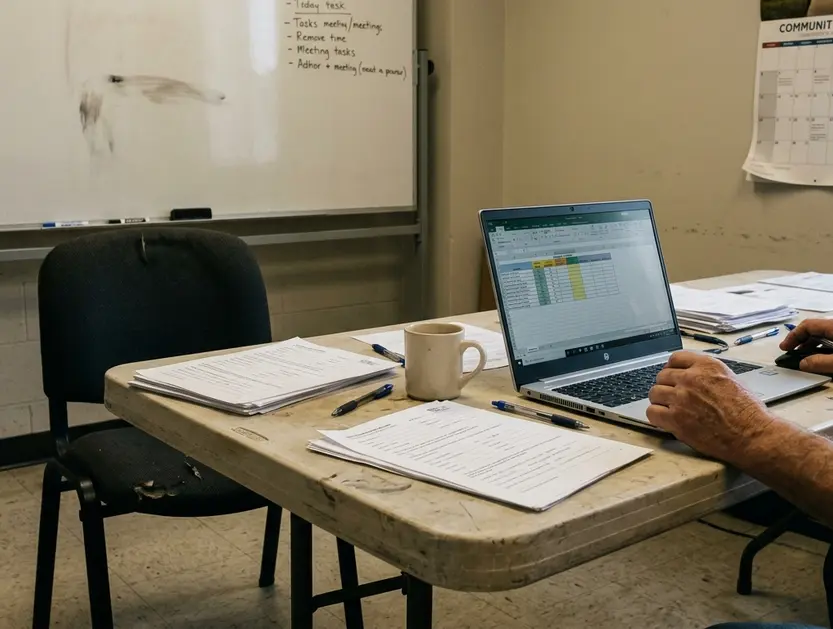
A Four-Question Check-In
- What is due next?
- What is the first visible action?
- What could interrupt it?
- When will you check that it is finished?
The language should remain neutral and concrete. If the student anticipates an interruption, the mentor can help identify a response in advance: move the materials to a quieter place, set a start cue, or ask the supervising adult to clarify access to an assignment. The goal is to rehearse a repeatable process, not to create constant surveillance.
After ten to fifteen school days of practicing the first behavior, programs can review the same records used for the baseline alongside mentor notes and student feedback. Keeping the evidence source consistent makes the comparison easier to interpret.
Key Takeaway: Make the Relationship Predictable
Dependable Mentoring
Peer connection creates engagement. Training, consistency, small goals, and adult supervision make that support dependable.
Executive-function difficulties disrupted the student’s homework routine. A trained peer mentor introduced structured accountability through regular engagement. Qualitative improvements followed in focus, homework completion, and confidence.
An individual case can inform program design, though it cannot establish the same outcome for another student. The first goal should align with the learner’s educational plan, accommodations, course demands, communication preferences, emotional state, and existing family, school, specialist, or clinical supports.
Peer-Mentoring Readiness Check
- Define the mentor’s role. Specify the academic support the mentor may provide and exclude clinical, therapeutic, and disciplinary functions.
- Complete mentor training. Cover listening, session structure, boundaries, documentation, and escalation procedures before independent meetings begin.
- Select one initial behavior. Write it as an action the student can perform and verify.
- Establish a regular check-in process. Use an existing planner, portal, or brief record whenever possible.
- Name the supervising adult. Ensure the mentor and student know who receives academic questions, emotional concerns, and safety escalations.
Programs can schedule a progress review after ten to fifteen school days of practice. The review should examine whether the chosen behavior occurred, what interrupted it, and whether the goal should remain in place or advance to the next step.
Prepared by achiya’s Educational Programs Team
achiya is an Israeli educational nonprofit supporting children with learning disabilities through specialized tutoring, mentoring, and inclusive learning programs. Its educational programs focus on practical structures that help learners participate more fully in school while giving families and educators usable special education resources.
Before the next school week begins, schedule a 15- to 25-minute student-centered intake, identify the student’s immediate homework obstacle and preferred communication style, then write down one observable behavior, one method for checking it, and the name of the adult who will supervise the mentoring relationship.








Responses
The conversation starts with you.
Leave a Comment